Aura :
Booking beauty masters in one app
Industry
Beauty
Scope
iOS, bookings and master cabinet
Year
2026
About the project
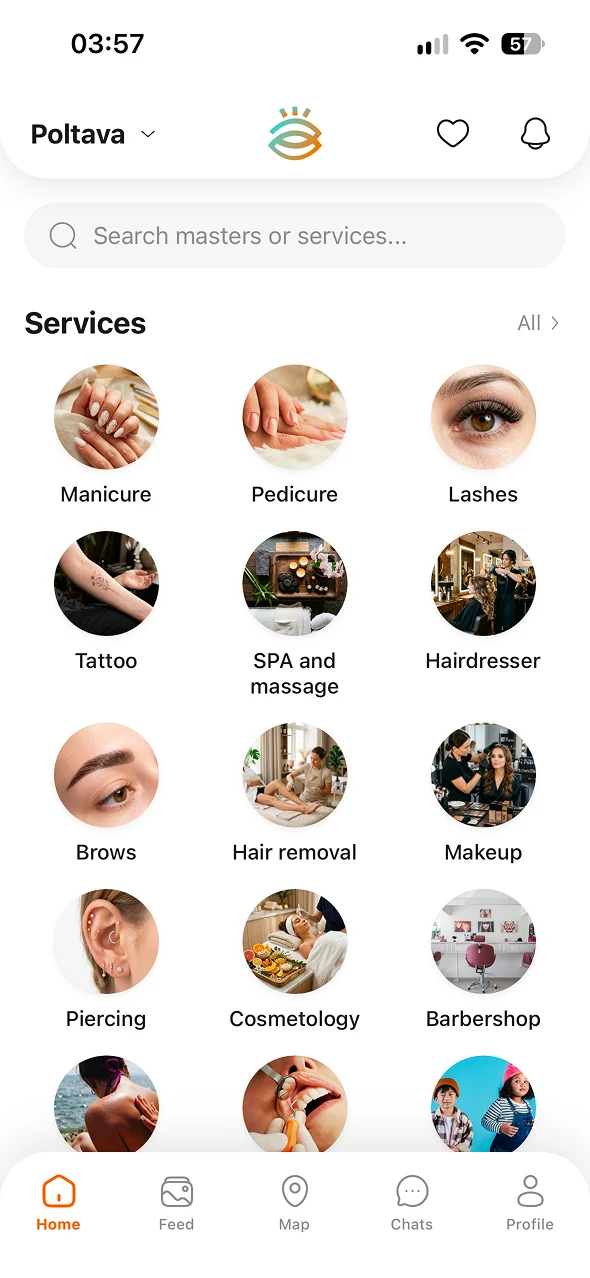
Aura is an app where a person finds a beauty master nearby, looks through their work and books a slot, while the master runs their own schedule, bookings and money in that same app. One app for both sides: client and master switch roles rather than programs.
The task
- 01Build booking so the price is visible before confirmation, every surcharge included
- 02Give the master a workplace rather than a profile: schedule, bookings, revenue
- 03Never let two clients take the same slot
- 04Speak to people in their own language, both fully translated
2
roles inside one app
2
interface languages
3
levels in the service catalogue
How we worked
01A three-level catalogue
Category, service, options. Length, coating, design — every choice changes the price and the duration right on screen, before the booking is confirmed.
02Finding a master
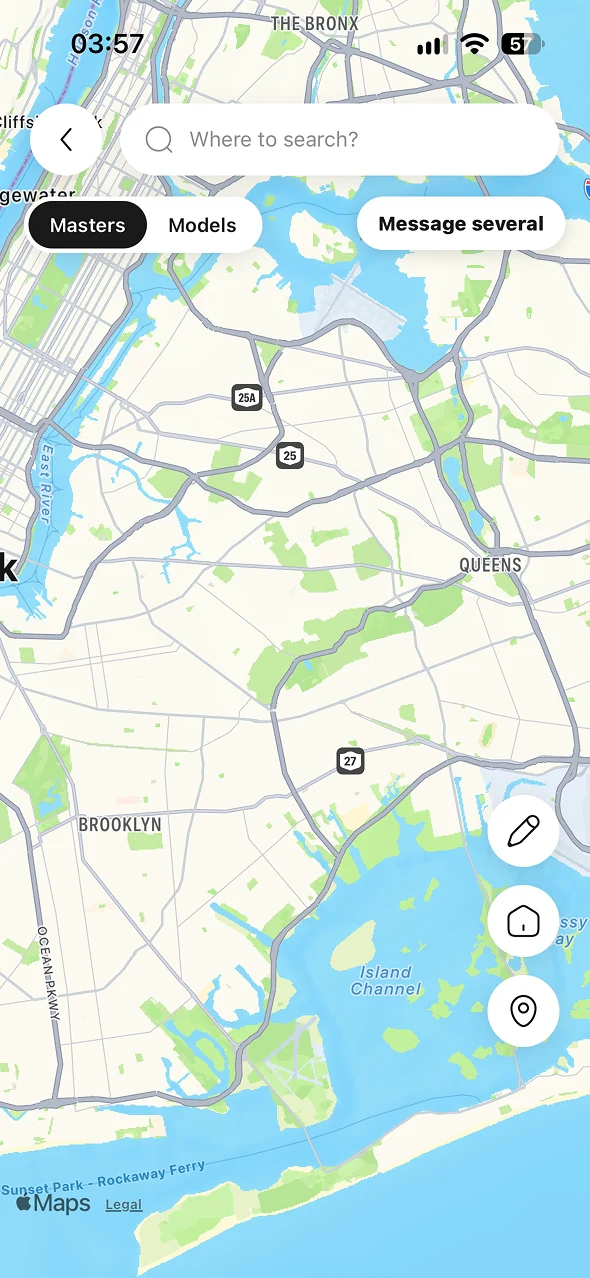
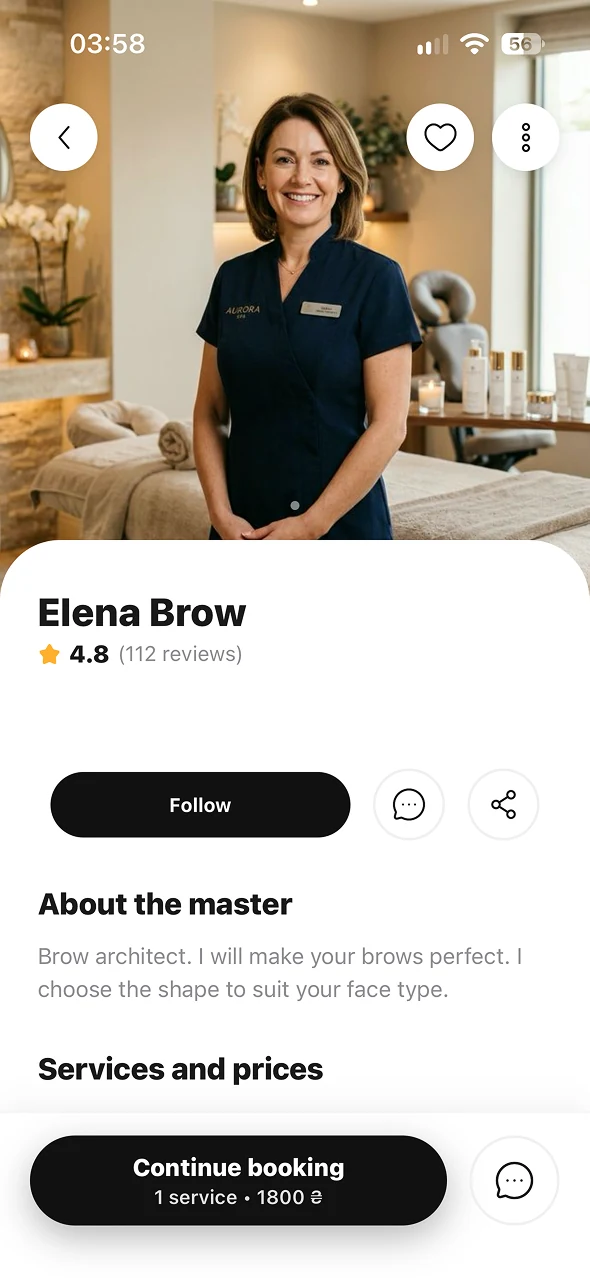
A feed of work, a map of masters nearby and a profile with portfolio, reviews and prices. Booking starts from the very photo the person liked.
03Booking against real slots
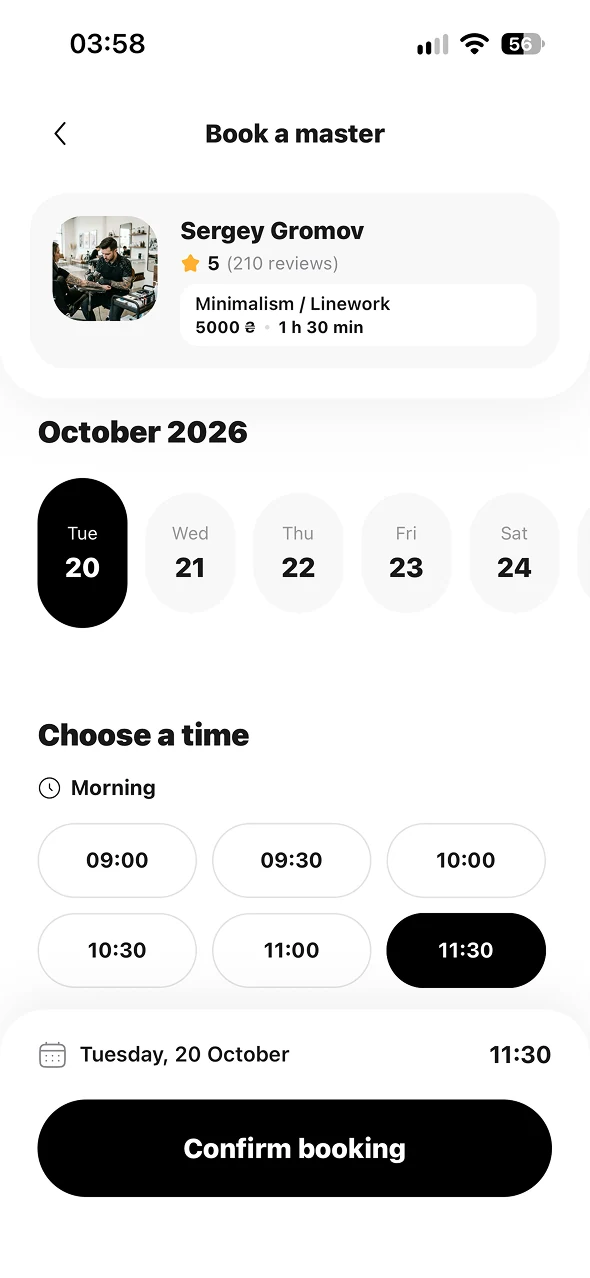
The app offers only the time that is genuinely free and takes it immediately. A double booking is rejected by the database itself, not by a check in the code.
04The master's cabinet
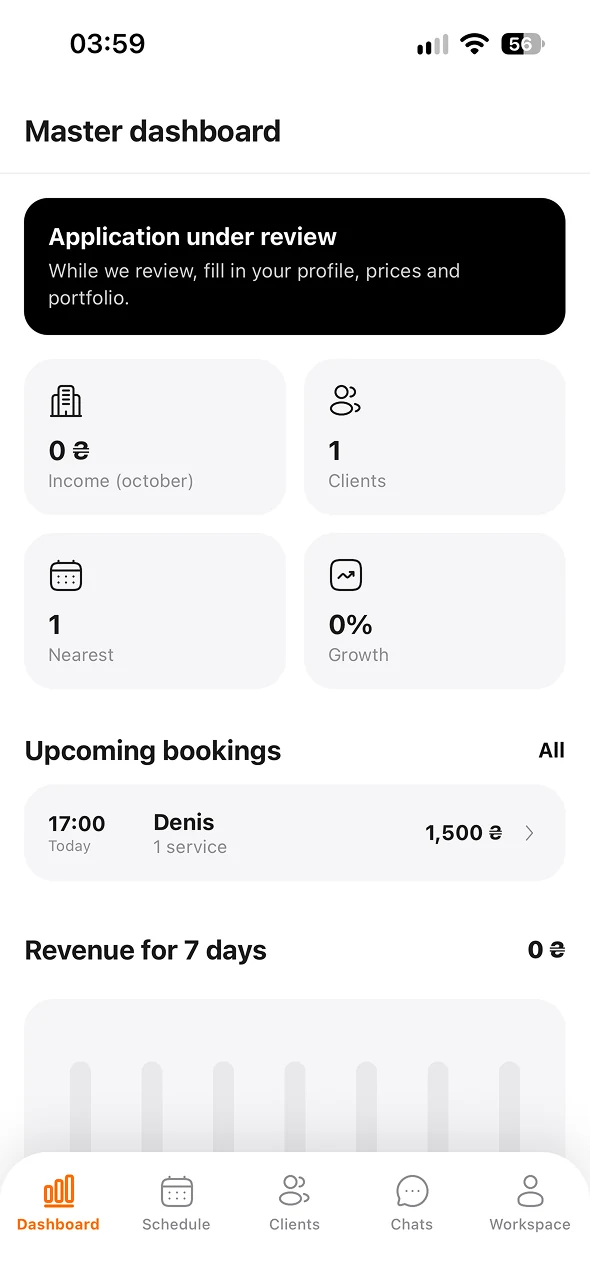
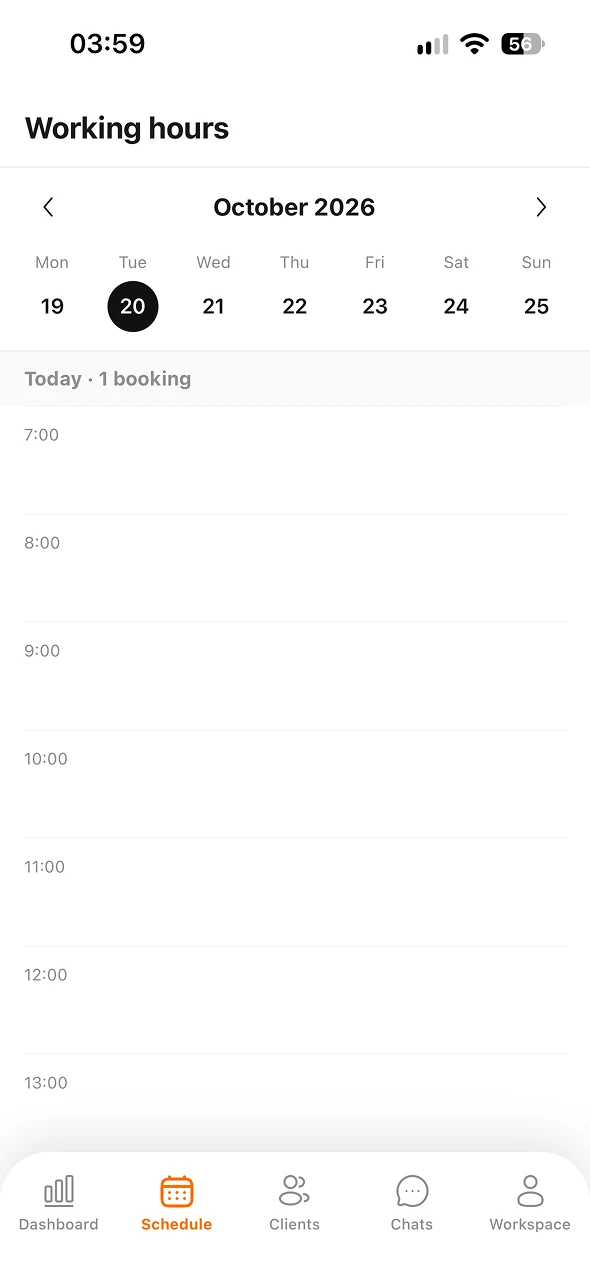
Their own screen with the month's income, client count, upcoming bookings and a revenue chart. The weekly schedule is edited by hand.
05Reminders
Notifications about a new booking and a reminder before the visit are assembled in the database on a schedule and reach both sides.
Two sides of one app
A marketplace only works when both sides find it comfortable. So the master here is not a card in a catalogue.
The client
Categories on the home screen, a feed of work, a map of masters nearby. People choose with their eyes, not from a list of names.
The master
A separate workplace: income for the month, clients, upcoming bookings, revenue as a chart and the week's schedule.
Switching
The role changes in the profile, the app stays the same. A master does not need a second program to book someone themselves.
The price is visible before booking
The main reason a booking falls apart is a sum that grew on arrival.
Options move the price
Length, coating, design, add-ons. Every choice recalculates the total and the duration at once.
A range across masters
The same service costs differently with different masters, and that is visible before the choice, not after.
The total before confirming
On the last screen the person sees service, master, time and sum as one block.
What holds the schedule together
A booking is not a form. It is a place in time that cannot be given away twice.
Taken time is never offered
Free slots are derived from the master's schedule and the bookings already made, rather than listed as plain hours.
The database rejects double bookings
The rule lives in the database, not in a check inside the app: two people tapping at the same moment cannot take one slot.
Reminders on a schedule
A job in the database checks every ten minutes who needs reminding about a visit, and sends the notification.
Built with
React Native
Expo
TypeScript
Supabase
PostgreSQL
Outcome
The app is built and going through internal testing before it is published to the App Store. The catalogue, map, feed, chat, booking against real slots, the master cabinet and notifications all work. Alongside the app there is a public site and an admin panel.
A booking platform survives not on a pretty catalogue, but on the fact that a slot cannot be taken twice.